
ABOUT LYNNE
You'll find me quietly warming protein on the stove each morning, and I feel stronger than I did in my forties.
For years it ran the other way, and the afternoons were the hardest part, when I would drag myself through a 2:30PM fog and reach into a desk drawer hoping a granola bar would fix it. I lived in that version for a long time, and what I teach now is everything I worked out climbing my way back.
Would rather start with the science than my story? The free 3PM guide is right here.
MY JOURNEY TO THE KITCHEN
Here is the longish version, of how cooking landed at the center.
I was running on empty and calling it midlife.
For the last decade or so of a 35-year corporate career, my afternoons were the hardest part of the day. Around 2:30PM the fog would roll in, and I would reach into my desk drawer for whatever was there, eat it, and feel no better an hour later. I told myself this was just what your 40's felt like and that the fix was to try harder.
Over those 35 years I worked my way into senior roles in learning and organizational development, and I was good at the work and cared about the people I did it with, and for much of that time I was also depleted in a way I could not name.
Even then, the evenings in my kitchen were the part of the day that felt like mine, chopping and stirring, moving to some music, and I cooked for the pleasure of it long before I knew it could be the work.
I left corporate in January 2026 to build this work full time, and that decision started in my kitchen long before it reached a boardroom.
It wasn't. The answer turned out to be protein. And I had no idea.
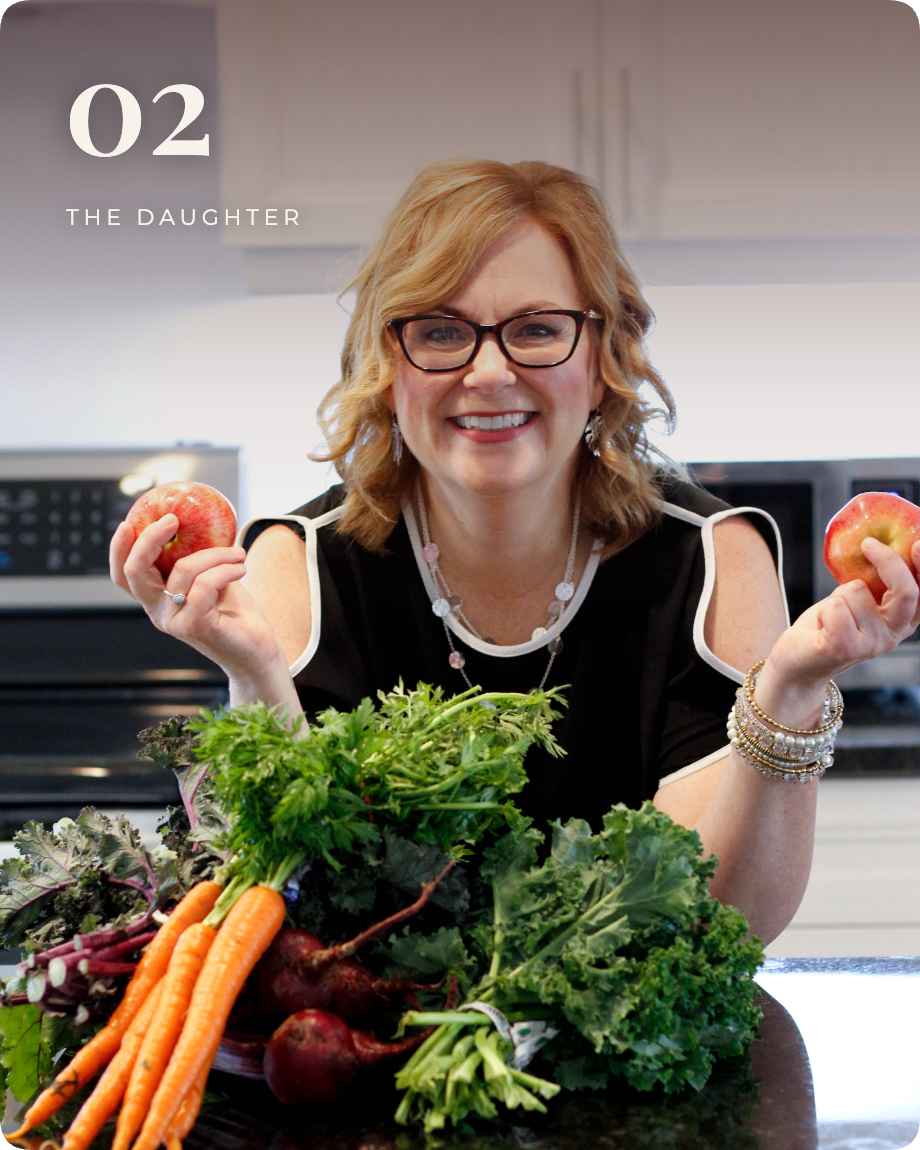
My daughter transformed, and it changed how I saw food.
Before any of this was a business, it was personal in a different way. My daughter Allyssa spent years struggling with her health, and I spent those years watching and reading and trying to understand what food could do that medicine wasn't doing. When she went dairy-free, gluten-free, and off refined sugar, she changed completely, and within six months she was the healthiest I had ever seen her. Feeding her well turned into one of the great pleasures of that time, setting down plates of colour and flavour and watching her light up, and it was the first time I understood cooking as love you can taste.
That sent me to culinary school in 2016, where I trained as a chef and started building a specialty in food as medicine, learning how particular combinations of ingredients support the body through different conditions, and how to make that food taste like something you would choose for the pleasure of it, not only for your health. I had loved to cook my whole life, and now I understood why it mattered all the way down to the cellular level.
Food is not just fuel. Food is information.
Food is medicine. Food changes everything.
03
THE RECKONING
Surgical menopause arrived overnight, with no roadmap.
In 2023 I went in for a hysterectomy after what turned out to be a cancer scare, and three days later I had my first hot flash. Nobody had told me that was coming. I woke up in surgical menopause with no warning and no preparation, and within six months I had gained twenty-five pounds while my body responded differently to everything I had always done. I went looking for answers the way I know how, which is thoroughly.
Over that time I earned a menopause coaching certification and rebuilt the way I ate from the ground up. I had been eating the way most midlife women eat, with a couple of eggs at breakfast (or sometimes skipping breakfast to save time), some chicken on a lunch salad, and the real protein saved for dinner, which was both less than my body needed and stacked almost entirely at the end of the day.
When I moved to 100 to 120 grams of protein a day spread across every meal, things began shifting that I had stopped expecting to shift. The afternoon fog lifted. I stopped feeling hungry and short-tempered between meals, my energy came back, and for the first time in years I felt like myself in my own kitchen again. The surprising part was how good the eating was. I was roasting chicken until the skin crackled and the smell filled the house, and making real breakfasts of eggs and greens and good sausage, and it tasted like food I would cook for someone I love.
A small slip on the ice showed me what my bones were doing.
In January 2024 I was skiing in the Dolomites, and after a full day on the mountain I stopped at a hut for a break, walked into the bathroom in my ski boots, hit a patch of ice, and went down. I was bundled in a padded jacket and the fall felt like nothing, and still I broke my wrist.
When I got home, my doctor sent me for a bone density scan, something no one had ever suggested to me before, and it came back showing osteopenia across every site they measured, with a real fracture risk over the coming years. I had been eating carefully, exercising, and taking calcium, and my bones were thinning quietly the whole time, mostly because I was not eating nearly enough protein to hold them.
Even with that warning, the old instinct was hard to shake, and it is the same one that traps most of us. When the scale will not move, we reach for the playbook that worked in our 30s and 40s: eat less, push harder, assume we just need more willpower. That is exactly what I did. The protein had taken some of the weight with it, and I was impatient for the rest, so I drastically cut my calories to force it off. Instead my body ran out of fuel, and that September I passed out, separated my shoulder, and landed in the hospital.
A body in her 50's does not answer to cutting and pushing the way a body in her 30's did, and mine had just proven it on the floor. That was when it clicked: I had to feed myself before my body would do anything I asked. So I stopped chasing a smaller number, kept strength training, and ate enough protein to actually recover, and the rest of the weight came off on its own while I got stronger than I had been in decades.
Eat less, exercise more, push harder, ask nothing of your body in return and eventually your body stops cooperating.
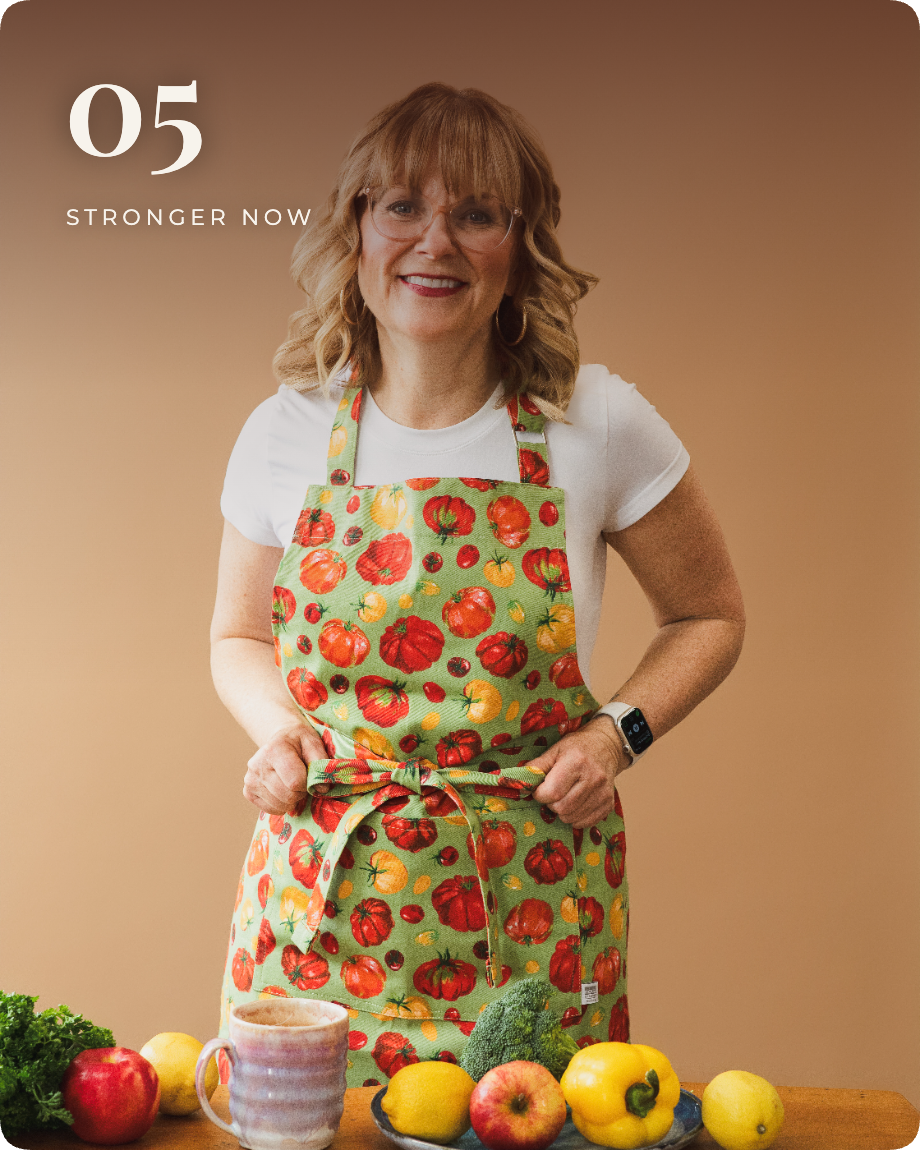
This is the part I actually want you to know.
Three years in, I eat 100 to 120 grams of protein a day without measuring anything, and I strength train a few times a week, partly because I like how it feels and mostly because I want to carry my own groceries and my own suitcase when I am 80. Sleep, which had been unreliable since my mid-thirties, finally feels like rest.
I travel as much as I can, and everywhere I go I end up in someone's kitchen, learning how women in that part of the world source and cook and share their food, because that curiosity sits at the center of everything I teach. My children are grown and they still make me laugh, I love live music and will dance wherever there is a reason to, and I cook because it is the most direct way I know to show love.
The kitchen used to be a place I passed through on my way to the next thing.
It has become the warmest room in my life.
What I do now
It all comes back to one anchor.
I'm a trained chef, a Senior Culinary Nutritionist, and a certified menopause coach, and I build simple, sustainable nutrition for high-performing midlife women through The Protein Anchor Method. The method asks one thing of you: anchor every meal with protein first, and build the rest of the plate around it. There's nothing to weigh or track, and no shakes unless you truly like them. The food is meant to be genuinely delicious, the kind you'd happily cook for people you love on a Friday night, because a way of eating only lasts if you look forward to it.
If you want to understand what's happening in your body before you commit to anything, start with the free guide, which walks through what's going on at 3pm and what to eat instead, and takes about ten minutes to read.
DOWNLOAD THE FREE 3PM ENERGY CRASH GUIDECredentials
The training behind the table.
Chef
Trained at culinary school, beginning 2016.
Senior Culinary Nutritionist
Culinary nutrition program with a specialty in food as medicine.
Certified Menopause Coach
Completed during the six months that rebuilt how I eat.
35 years in corporate
Learning, quality, and organizational development.
Three years rebuilding my own body
The credential that matters most to the women I work with.
FREE GUIDE
Crashing at 3pm? Not anymore.
The 3pm energy crash is one of the most common things midlife professional women describe to me, and one of the most fixable. I wrote a free guide that explains exactly what's happening in your body at 3pm and what to eat instead.